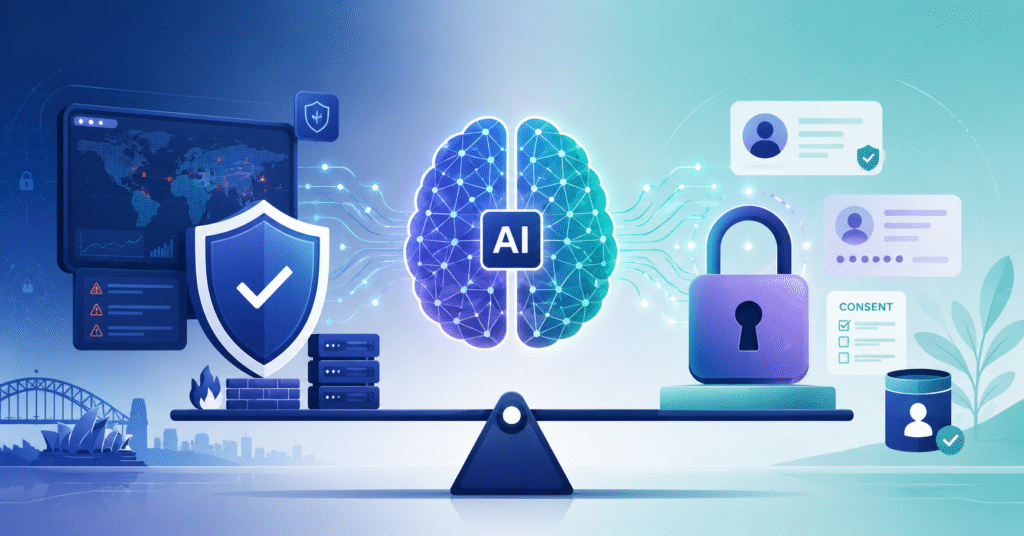
Artificial intelligence (AI) has revolutionized the way we approach cybersecurity. With its ability to analyze massive datasets, detect patterns, and automate responses, AI enhances both the efficiency and effectiveness of security operations. The 2024 BIG-4 survey highlights that 66% of security leaders now consider AI-based automation crucial to combat emerging threats.
However, the integration of AI in cybersecurity brings ethical challenges, especially in balancing security with privacy rights. AI’s reliance on data collection may lead to invasive practices, where personal information is monitored without explicit consent. To address these concerns, it’s essential for organizations to adopt ethical frameworks prioritizing transparency, consent, and data minimization.
By implementing robust anonymization techniques and updating privacy notices to reflect AI’s role, organizations can maintain trust and comply with regulations. Ensuring individuals have control over their data is fundamental to modern cybersecurity ethics.